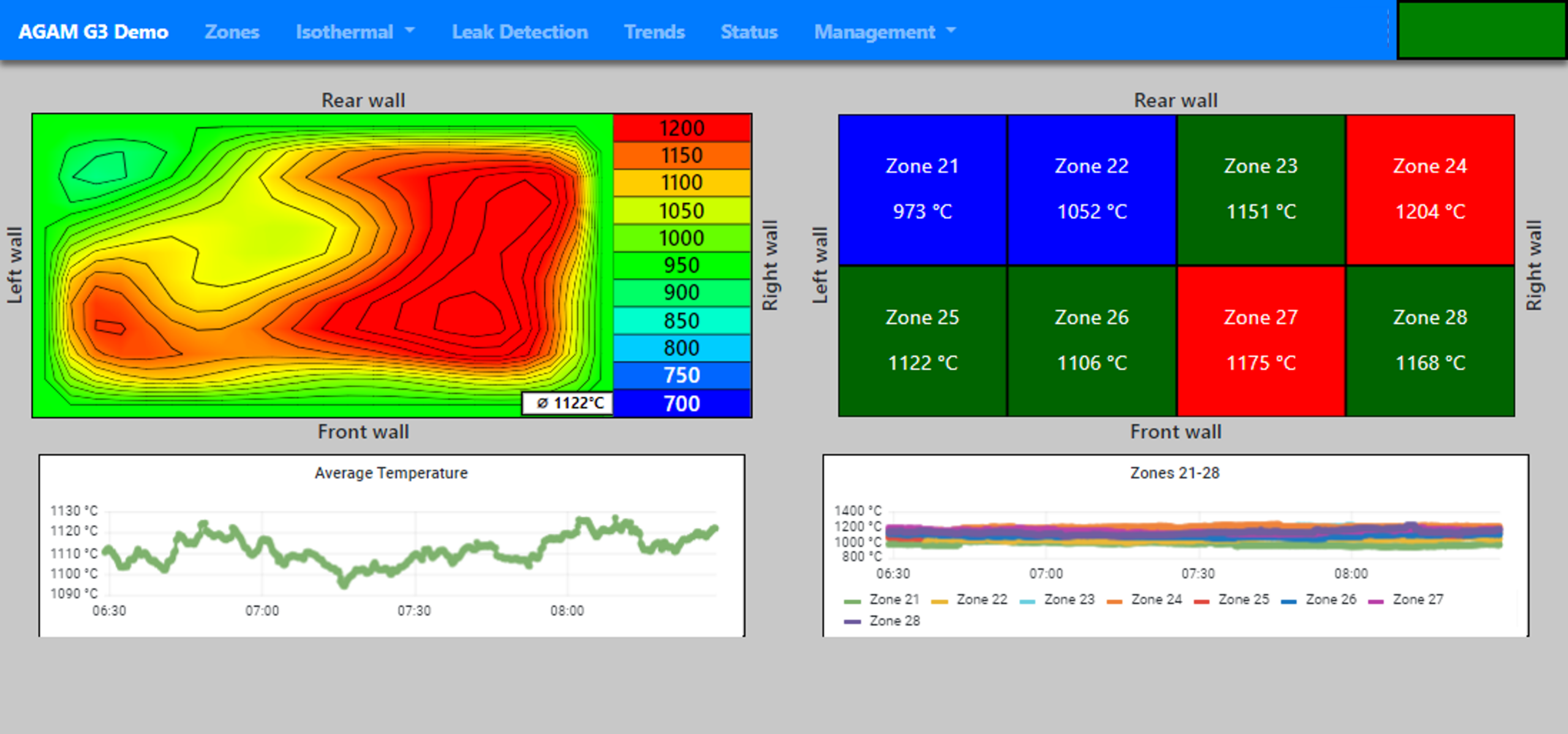
With AGAM, we have been setting standards in 2D gas temperature measurement since 1990. In over 300 plants worldwide, AGAM is an important element for efficient and environmentally friendly operation.
AGAM repeatedly proves its performance in monitoring, control, and optimization in combustion plants, power plants, steelworks, and refineries.
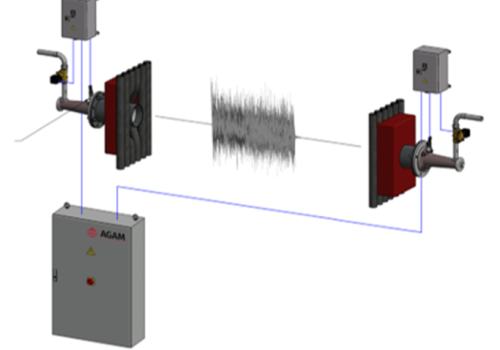
AGAM is based on a simple but reliable acoustic principle for temperature measurement in harsh environments.
This principle, combined with a powerful algorithm and a modern interface for visualization and control, enables AGAM to provide superior temperature measurement for the control of combustion applications.
Installations
0+
Continents
0
Countries
0
Advantages
Why use AGAM?
High speed
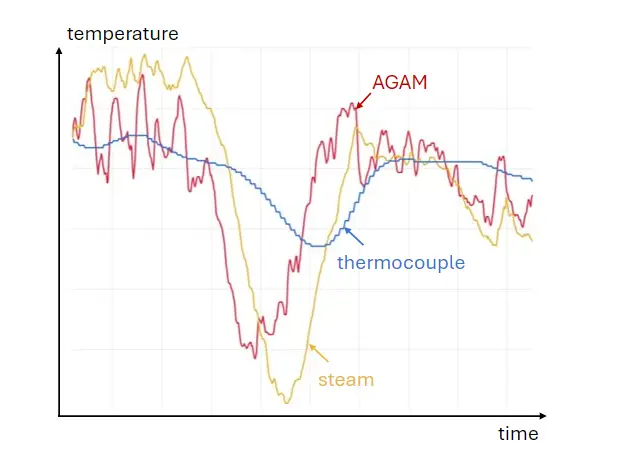
With the latest generation AGAM G3, we can now measure 200 path temperatures in less than 15 seconds. Tomographically determined 2D representations are updated every few seconds. For waste incineration plants, this means that temperature fluctuations can be detected even faster and critical temperature peaks can thus be avoided.
High resolution
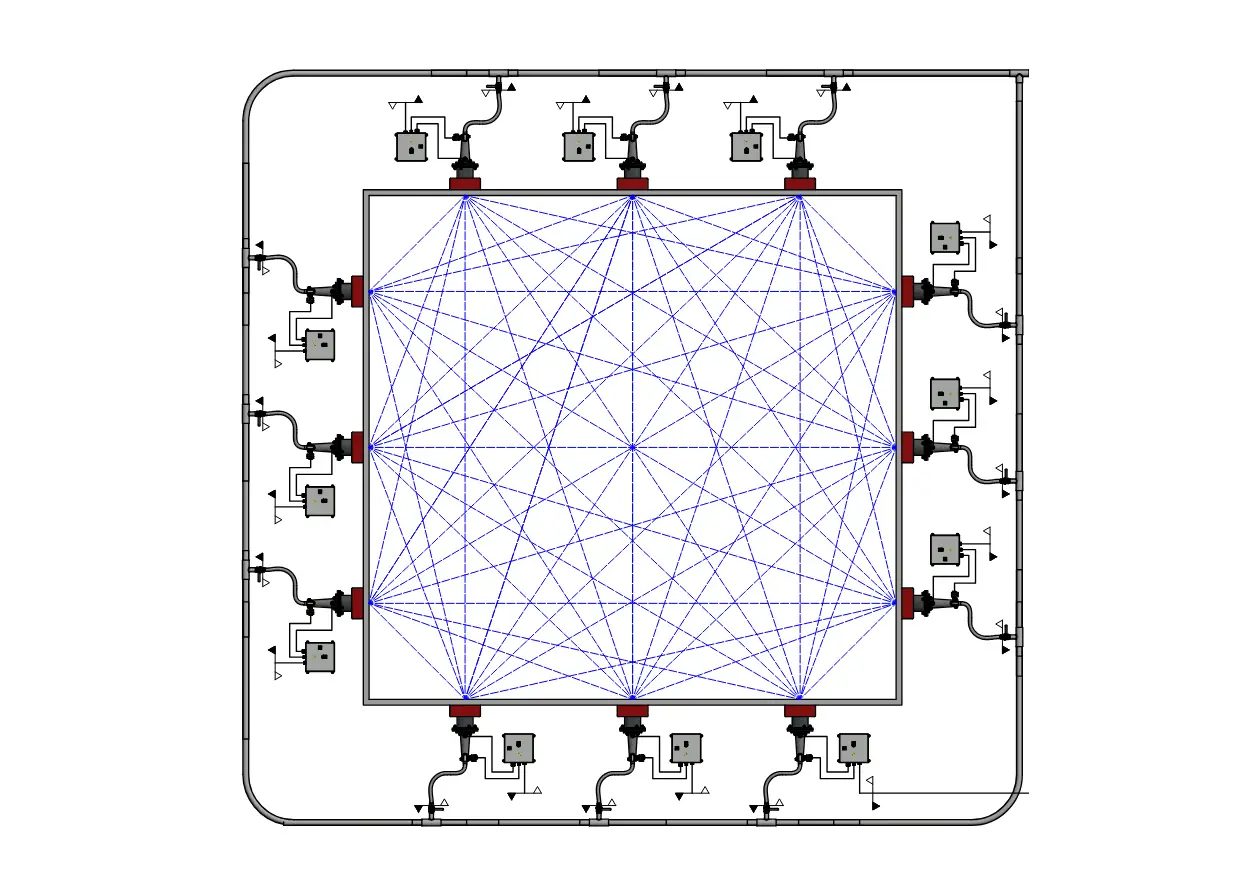
AGAM uses transceivers that combine transmitter and receiver in one unit. Therefore, all transceivers together form a dense network of measurement paths, resulting in the mathematically maximum possible number of measurement paths with the given connections. The network of measurement paths forms the basis for calculating the high-resolution 2D temperature profile.
Decentralized digitalization
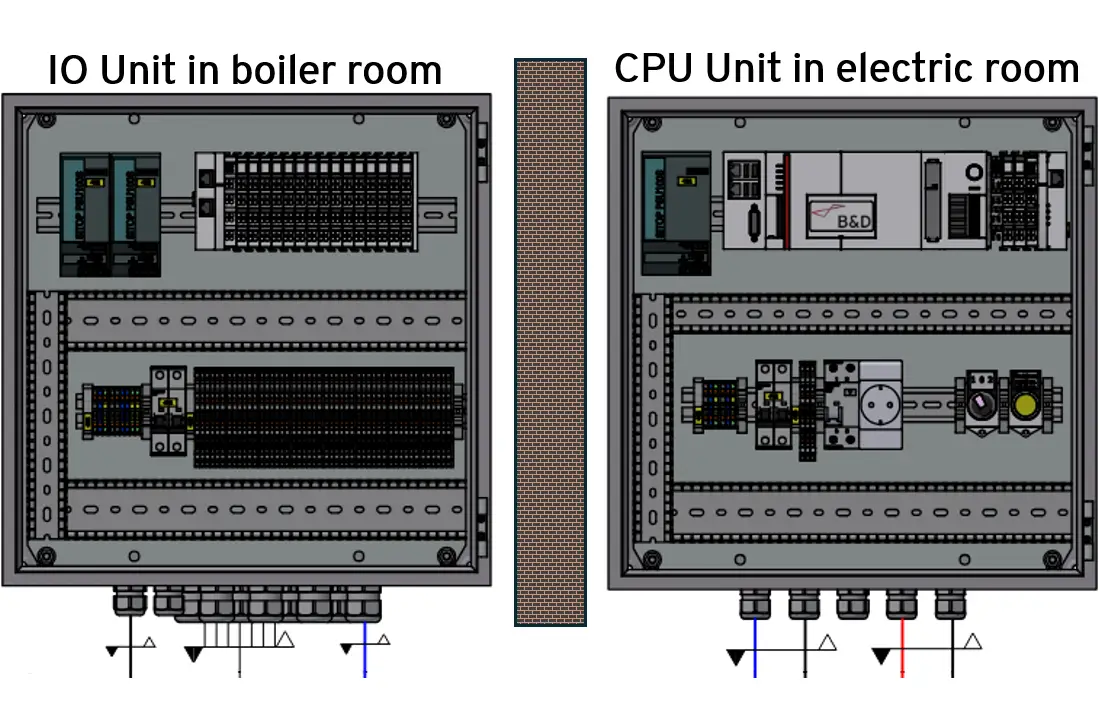
Thanks to its modular design, AGAM offers the flexibility to digitize signals close to the measurement points. This eliminates the influence of interference signals over long analog lines. All digitized data is transmitted via standard network cables or fiber optics. In modern systems with multiple gas temperature measurement levels or many lines, the required length of shielded signal cables in large plants can thus be significantly reduced.